Used Vehicles from China 2026: Chinese EVs vs Japanese Hybrids for Importers
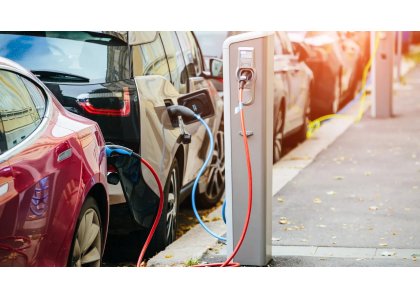
China's export boom is now a two-engine story. In September 2026 the country shipped around 919,000 passenger vehicles, up 64% year on year, while the first nine months of the year passed 7.1 million units, up more than 70% (China Association of Automobile Manufacturers, via AP, 12 October 2026). Crucially, both products driving that growth leave the same Chinese ports: battery-electric vehicles from Chinese brands, and Japanese-brand hybrids built in China. If you import used vehicles from China, the EV-versus-hybrid decision is now the single biggest call you will make.
Two Very Different Vehicles Leave the Same Port
Chinese-brand EVs and Japanese hybrids share a factory base, not a philosophy. The first is a pure battery vehicle: no engine, no fuel tank, and a cost structure that analysts put around US$20,000 to build versus roughly US$31,000 for an equivalent European model (AlixPartners, cited by AP, October 2026). The second keeps a combustion engine and adds electric motors and a small battery. It is refuelled at any petrol station and never needs a plug.
That difference matters more than badge loyalty in the markets Chinese exporters actually serve. China's domestic sales fell 21.1% year on year in July 2026 to 1.47 million vehicles (Reuters via Investing.com, 11 August 2026), and the surplus is flowing to Africa, the Middle East and Central Asia, where charging networks are still thin.
Head-to-Head: What Actually Differs
|
Factor |
Chinese-battery EV |
Japanese hybrid (built in China) |
|
Powertrain |
Electric motor and battery only |
Petrol engine plus electric motor(s) |
|
Energy source |
Grid charging, home or public |
Petrol or diesel at any station |
|
Running cost |
Low energy cost per km, higher entry price |
Higher fuel cost, lower entry price |
|
Infrastructure need |
Depends on reliable public chargers |
None beyond the existing fuel network |
|
Parts and service |
Newer network, often brand-specific |
Deep, long-established supply chain |
|
Best-fit buyer |
Urban fleets on short, fixed routes |
Long-distance, inter-city and rural buyers |
A concrete example from current stock: the Used Car BYD Hiace 07 EV 2025 Model 610 Smart Driving Edition is a mid-size electric SUV with a 2,930 mm wheelbase, LiDAR-backed driving assistance and a 50-inch AR-HUD. On the hybrid side, the 2024 Toyota Highlander Dual Engine 2.5 Hybrid 4WD 7-Seater pairs a 2.5-litre engine with a dual-motor system for 181 kW combined, uses 5.97 L/100 km on the WLTC cycle, and seats seven.
Charging Infrastructure Is the Deciding Factor
The EV case is only as strong as the plug, and that is changing unevenly. BYD plans to install between 200 and 300 fast-charging stations across South Africa by the end of 2026 (TechCentral, reported October 2025), while markets such as Saudi Arabia are only now scaling public charging.
Hybrids sidestep the problem. They deliver a meaningful share of electric driving without requiring a single new charger, which is why they hold up in exactly the markets where infrastructure lags. For a dealer selling into a secondary city or along a cross-border route, that is often the difference between a vehicle that sells and one that sits. Fuel is not free, of course, but a petrol station exists on almost every route an importer's customer already drives.
Resale Value and Brand Strength
Hybrids also carry the stronger resale story in most emerging markets. Toyota's electrified line-up accounted for a record 87% of its European sales in the first half of 2026 (Toyota Motor Europe, 16 July 2026) and roughly 57% of its US sales in the second quarter. In South Africa, Toyota and Ford dominate the used-car market, and in Kenya Toyota's resale value is routinely ranked above rivals. Chinese EVs are improving quickly, but they are still building that depth.
So Which Should Importers Choose?
There is no single answer, only a fit. Choose a Chinese EV when your buyers are urban, the route is short and predictable, and charging is available at the depot or at home. Choose a Japanese hybrid when your market is long-distance, sensitive at the pump, or simply not yet wired for electric. Many successful importers now stock both and let the buyer's route decide.
· Stock the EV when your buyer has depot charging, a fixed daily route and a fleet of three or more.
· Stock the hybrid when the buyer drives inter-city, has no charging access or resells within two years.
· Check the destination country's import age limit, duty band and emissions rules before you commit either way.
Conclusion
China's 919,000-unit September proves demand, not direction. The used vehicles from China moving through Chinese ports now include both the cheapest electric platform in the world and some of the most proven hybrid hardware ever built. The importers who win in 2026 will match the powertrain to the road, not to the trend.


