Used Cars from China to Angola 2026: Rules, Duties & Costs
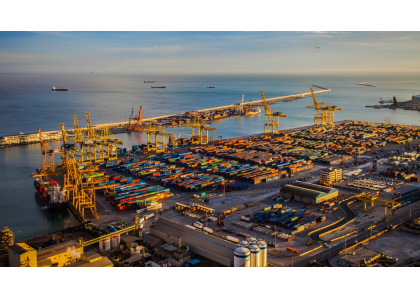
Angola drives on the right, and that one fact reshapes its used car import market. In a region where Kenya, Tanzania and Zambia accept right-hand-drive (RHD) vehicles only, Angola’s left-hand-drive (LHD) rule puts Chinese domestic cars in direct compliance — no conversion, no special factory order. The market has already responded: Angola imported 7,086 vehicles in the first half of 2025, up 41% year on year and close to 80% from Asia, with China the largest single supplier at a 23% share, or 1,602 units, ahead of the UAE on 1,100 units (ARCCLA data reported by Expansão, February 2026).
Angola’s Used Car Age Limit: Decree 155/20 in 2026
Angola’s age limit comes from Presidential Decree 155/20, in force since 1 June 2020. The national land transport agency (ANTT) states that used light vehicles must be no more than five years old, used heavy vehicles no more than eight years, and used motorcycles no more than three. The clock runs from the date of manufacture in the agency’s own guidance, while the decree also refers to the first-registration date — so keep both records and plan against the earlier of the two.
In practice, a light vehicle arriving in Angola during 2026 should be a 2021-or-newer unit. ANTT has publicly warned that buyers have lost money to sellers who overstated a build year; a unit that fails the check is not a negotiation, it is a fine and, in some cases, re-export at the buyer’s cost.
|
Vehicle type |
Maximum age |
Safe model year for 2026 arrival |
|
Light vehicles (cars, SUVs) |
5 years |
2021 or newer |
|
Heavy vehicles (trucks, buses) |
8 years |
2018 or newer |
|
Motorcycles |
3 years |
2023 or newer |
Left-Hand Drive Is Mandatory — and That Favours Chinese Stock
Angola drives on the right, so LHD is the configuration that registers and an RHD unit is refused registration. Converting steering at the port is not a legal route in the region, which makes the steering position the single most expensive mistake a buyer can make. China’s domestic fleet is LHD, so Chinese used cars arrive compliant as built. Auction stock from Japan, by contrast, is usually RHD and suits Mombasa or Dar es Salaam — not Luanda.
ANTT also requires that no vehicle is imported without the agency’s prior authorisation. That approval sits at the front of the process, not at the end: the import licence and the loading certificate both depend on it.
Three Gates Before a Vehicle Reaches Luanda
· ANTT import authorisation — applied for by the importer or their Angolan representative, using the importer’s tax number, vehicle photographs, a technical specification sheet, the proforma invoice and registration evidence.
· Documento Único (DU) — the import licence opened in Angola. The consignee named on the DU must match the bill of lading exactly, and the licence runs on a limited validity window.
· CNCA / ARCCLA loading certificate — the cargo tracking certificate, filed in the country of loading and validated before the vessel arrives. One certificate covers one bill of lading, and cargo arriving without a validated certificate is not released.
Alongside those approvals, prepare the bill of lading, commercial invoice, packing list, certificate of origin, manufacture-date evidence that proves the age band, and the exporter’s export or de-registration papers.
Angola Import Duty, VAT and Port Costs
Angolan charges are calculated on CIF value — the vehicle, freight and insurance combined — in the following layers (U.S. International Trade Administration, Angola Country Commercial Guide):
|
Charge |
Rate |
Base |
|
Import duty |
2–50% by HS line (average 10.9%) |
CIF value |
|
General customs fee |
2% |
CIF value |
|
Stamp duty |
1% |
CIF value |
|
Customs brokerage |
0.5–2% |
Per entry |
|
VAT (IVA) |
14% |
CIF plus duties and taxes |
Because VAT is charged on CIF plus duty and other taxes, the effective burden is higher than the headline rate suggests. Two operational points also catch first-time importers: Angola has had no dollar clearing inside the country since 2016, so settlement runs in euros or through an offshore correspondent bank, and advance payments are capped at USD 50,000 per operation. At the port, demurrage is free for the first 15 days and terminal storage for the first five; after that published rates run at about USD 40 and USD 61 per day for a 40-foot container.
Ports, Transit Times and What Buyers Are Ordering
Discharge ports are Luanda and Lobito, with Cabinda handling some cargo and Walvis Bay in Namibia used as a transit alternative. Sea transit from China to Luanda or Lobito is roughly 30 to 45 days, so paperwork should be sequenced backwards from the sailing date rather than from the arrival date.
The mix has shifted towards affordable models. Buyers weighing a Chinese brand should price parts availability as well as the vehicle: sector specialists note that spares for newer Chinese models are not yet widely available on Angola’s parallel market, unlike the traditional brands (Expansão, via 360Angola). Two units from our own stock illustrate the two ends of the demand curve: a 2022 Toyota Yaris L 1.5L CVT with 27,000 km, comfortably inside the five-year window for 2026 — Used Car Toyota Yaris L 2022 Leading Edition — and a Used Car 2024 Geely Boyue L 1.5T Longteng Edition with 12,000 km, which shows how quickly Chinese-brand SUVs have become the volume choice in this price tier.
Supply is not the constraint. China shipped 894,000 passenger vehicles in August 2026 alone, 77.5% more than a year earlier (Reuters, 8 September 2026), and Africa’s used car market is put at USD 49.71 billion in 2026 (Mordor Intelligence, 11 September 2026). For Angola, the constraint is documentation and steering configuration — both solvable before the deposit, neither solvable at the port.
Conclusion
Angola is one of the most straightforward destinations in Africa for Chinese used cars, because LHD is the rule rather than the exception. The work sits in three checks: confirm the build year is inside Decree 155/20 limits, confirm ANTT authorisation before freight is booked, and confirm the CNCA loading certificate is validated before the vessel arrives. Get those right and the remaining variable is the landed cost — which should always be quoted from CIF, never from the sticker price.


