Nigeria Cuts Used Car Import Levy to 5%: 2026 Guide for Chinese Exporters
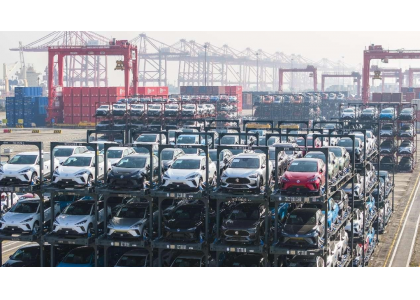
Nigeria has cut the import levy on used vehicles from 15% to 5% of CIF value as part of its 2026 Fiscal Policy Measures, with the rate on new vehicles dropping from 20% to 10%. Confirmed by the Nigeria Customs Service (NCS) and effective from 1 July 2026, the reform is the strongest signal in years that Africa's largest used-car market is opening its doors wider. For Chinese used car exporters, who already supply Nigeria under the Belt and Road used-car trade program, the question is no longer whether to enter the market, but how to structure a shipment so the full benefit of the cut reaches the bottom line. This guide explains the new rates, the charges that still stack on top, and a practical action plan.
What Actually Changed on 1 July 2026
Under the 2026 Fiscal Policy Measures, the headline change is the National Automotive Council (NAC) levy on imported vehicles. NCS Comptroller-General Adewale Adeniyi confirmed the new regime while defending the service's 2026 budget before the House of Representatives, noting that implementation of the revised tariff regime commenced in May 2026.
|
Charge |
Before |
After (1 July 2026) |
|
NAC levy - used vehicles |
15% of CIF |
5% of CIF |
|
NAC levy - new vehicles |
20% of CIF |
10% of CIF |
|
Basic import duty (ECOWAS CET) |
20% of CIF |
20% of CIF (unchanged) |
|
Green tax (new) |
- |
0% / 2% / 4% by engine size |
The Real Landed Cost: Duty Is Only One Layer
Dealers who price a Lagos-bound shipment on the headline rate alone are the ones caught off guard at the port. Nigeria's used-car import cost is a structure of several statutory charges, each calculated on a different base, and they compound rather than simply add up.
|
Charge |
Rate |
Base |
|
Import duty |
20% |
CIF value |
|
NAC levy |
5% |
CIF value |
|
Green tax |
0%, 2% or 4% |
Engine size |
|
Surcharge |
7% |
Duty amount only |
|
ETLS |
0.5% |
CIF value |
|
CISS / FOB levy |
1% (CISS) or 4% (FOB) |
FOB value |
|
VAT |
7.5% |
CIF + all charges combined |
For a used vehicle, duty plus levy now totals about 25% of CIF, down from roughly 35% before 1 July 2026 - a saving of about 10 points that flows straight into margin. Three details still trip up exporters: the 7% surcharge applies to the duty figure, not CIF; the CISS/FOB levy sits on FOB value; and VAT is charged on the full stacked total, which is why final bills run higher than a back-of-envelope guess. Note also that NCS runs an automated VIN valuation system that assigns its own dollar value based on year, make and model - customs does not necessarily use your purchase invoice as the base.
Green Tax: Not Every Engine Keeps the Full Saving
The new green tax claws back part of the saving on large engines, so the 5% levy does not benefit every vehicle equally:
· 0% - engines below 2,000cc, electric vehicles, mass-transit buses and locally made vehicles
· 2% - engines of 2,000-3,999cc
· 4% - engines of 4,000cc and above
· A 1.5L crossover keeps the full saving from the levy cut; a 4.0L V8 does not. The rule for exporters is simple: match engine size to the green-tax band before promising a landed price.
The Rules That Have Not Changed
Tariff reform does not relax eligibility. Nigeria still enforces a 12-year age limit, so used vehicles must be under 12 years old at the time of import - screen inventory by year first, then price. The base 20% import duty under the ECOWAS Common External Tariff also remains, and NCS has flagged plans to fully deploy its automated clearance platform (B'Odogwu/UCIS) to tighten valuation and compliance. Green-tax enforcement, CISS/FOB levy practice and port-level treatment can still vary, so confirm the current position with a licensed clearing agent before shipment.
Why This Opens a Window for Chinese Exporters
China exported more than 550,000 used cars in 2025 - a 145-fold increase since the national pilot began in 2019 - reaching over 160 countries, with Africa among the key destinations and Nigeria explicitly listed as a Belt and Road used-car trade partner. Chinese sourcing offers lower FOB pricing than Japan or US supply, which after the levy cut leaves more margin room on a Lagos-bound shipment. At about 25% duty-plus-levy versus roughly 35% before, the arithmetic changes materially: for a USD 10,000 CIF unit, the direct saving is around USD 1,000, plus a slightly lower VAT base.
Action Plan Before Your Next Lagos Shipment
· Screen age first - vehicles must be under 12 years old at import.
· Price the full stack, not the headline: 20% duty + 5% NAC levy + green tax + 7% surcharge + ETLS + VAT.
· Match engine size to green-tax bands; sub-2.0L petrol and EVs capture the full saving.
· Expect VIN-based customs valuation, not invoice-based pricing.
· Confirm current CISS/FOB levy and green-tax enforcement with your clearing agent.
· Verify used-vehicle versus new-vehicle classification (including zero-kilometre used cars) before quoting.
Conclusion
The cut from 15% to 5% is the biggest pro-import signal Nigeria has sent in years, and it arrives just as China's used-car export industry matures. For Chinese exporters, low FOB prices, growing export capacity and a more open Lagos market form a rare combination. The window pays only for those who price the full cost stack, respect the 12-year rule and match engines to the green-tax bands.


