Kenya Used Car Import Regulations 2026: RHD-Only Rule and What It Means for China's Used Car Exporters
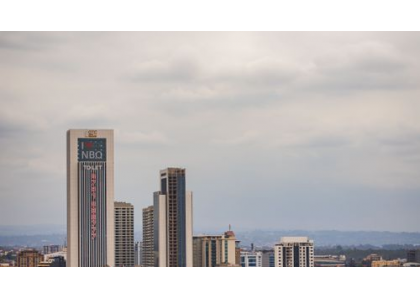
Kenya tightened the gates on used-vehicle imports on January 1, 2026, and the ripple effects are still spreading through East Africa's second-hand car trade. Under rules enforced by the Kenya Bureau of Standards (KEBS), only right-hand drive (RHD) vehicles first registered on or after January 1, 2019 may now enter the country - closing the door on older left-hand-drive stock that some traders once hoped to place in the region.
For Chinese used car exporters, the question is not only what Kenya now allows, but what the shift signals for Africa as a whole. This guide unpacks Kenya's 2026 used car import regulations - age limits, drive-side rules, duties and documentation - and explains where China's export stock still wins.
What Changed on January 1, 2026: The 2019 RHD Threshold
The Kenya Bureau of Standards (KEBS) notified all importers in November 2025 that, from January 1, 2026, only right-hand drive (RHD) vehicles whose year of first registration is 2019 or later would be cleared. The move enforces Kenya's long-standing eight-year age limit under Standard KS 1515:2000 - and the clock runs from the year of first registration, not the manufacturing year. A car built in 2018 but registered in 2019 fails the test; a unit first registered in December 2018 is permanently barred. Left-hand drive passenger cars are not accepted at all, and steering conversions are rejected (KEBS notice, November 2025, reported by the Kenya Times; AutoKenya import guide, May 2026).
How Much Does Clearing Cost? Kenya's 2026 Duties
The Kenya Revenue Authority (KRA) values used cars against its Current Retail Selling Price (CRSP) schedule rather than the invoice alone, so landed costs need careful modelling. The main components stack on top of each other:
|
Charge |
2026 rate (as reported) |
|
Import duty |
25% of customs value on the KRA schedule; industry guides report ~35% under 2026 CRSP revisions - confirm before shipping |
|
Excise duty |
20% for vehicles up to 1,500cc; 25% above 1,500cc; preferential 10% for electric vehicles |
|
VAT |
16% |
|
Import Declaration Fee (IDF) |
3.5% of the CIF value |
|
Railway Development Levy |
2% of the customs value |
Because every charge is calculated on the previous total, a small valuation difference multiplies quickly. Kenya's preferential excise treatment for EVs - 10% versus 20-25% for petrol models - is one reason Chinese electric and hybrid cars are drawing attention in Nairobi and Mombasa (KRA; AutoKenya, May 2026; Seaways Kenya guide, January 2026).
What the RHD-Only Rule Means for Chinese Used Car Exporters
First, the hard reality: China's used-export fleet is overwhelmingly left-hand drive, built for the domestic market, so standard Chinese used stock cannot be registered in Kenya regardless of price. Second, China is not among the origins covered by KEBS-approved pre-export inspection agencies - that list covers Japan, the UAE, the UK, Thailand, Singapore and South Africa. Vehicles from other origins are not automatically banned, but they face extra document validation costing roughly KSh 12,000 and taking about four working days, on top of inspection risk (AutoKenya, May 2026).
The real opening sits at the front of the market. Chinese brands now build RHD export versions, and RHD markets are warming to them: Reuters reported that Chinese automakers lifted their share of South African passenger-car sales to 16.8% in 2025, up from 11.2% a year earlier - evidence that Chinese cars can win on the right-hand side of the road. As Kenya's compliant 2019+ RHD supply tightens and prices climb, RHD-spec Chinese EVs and hybrids, helped by the 10% EV excise rate, are the credible entry wedge for the East African market (Reuters, May 2026).
Where Chinese Used Cars Still Win in Africa
Kenya's rule is a reminder that Africa is not one market. Chinese used cars clear quickly and profitably in the large left-hand-drive markets: Nigeria - whose 2026 fiscal policy cut used-vehicle import levies to 5% - Ghana, and across the Gulf, where Chinese and joint-venture models have built solid service networks. For exporters, the practical takeaway is to keep 2019+ LHD stock pointed at these destinations, where value models such as the Jetour X70 Plus family SUV and the budget Toyota Yaris L sedan clear without modification and hold steady resale demand.
2026 Compliance Checklist for Importers and Dealers
· Vehicle must be right-hand drive - no LHD passenger cars, no steering conversions.
· Year of first registration must be January 1, 2019 or later.
· Vehicle must pass KEBS KS 1515:2000 roadworthiness inspection, or arrive with a Certificate of Roadworthiness from an approved origin.
· Carry the original logbook (in English or officially translated); export certificates alone are not accepted by KRA.
· Budget for CRSP-based import duty, excise, VAT, IDF and RDL, and confirm current rates with a licensed clearing agent at the Port of Mombasa.
Kenya's 2026 used car import regulations reward preparation. In East Africa, Japan- and UK-sourced RHD stock keeps the upper hand for now; for Chinese exporters, the growth story runs through RHD export models and through the LHD markets of West Africa and the Gulf, where the price advantage of Chinese used cars is unchanged. Source wisely, document everything, and match every vehicle to a market that will actually register it.
Conclusion
Disclaimer: This article is for general information only and does not constitute legal, customs or tax advice. Regulations and duty rates change - verify current requirements with the Kenya Bureau of Standards, the Kenya Revenue Authority and a licensed clearing agent before shipping. Figures cited from third-party sources reflect their publication dates (2025-2026).


