Iraq Used Car Import Boom: Why Chinese Dealers Are Winning 80% Market Share
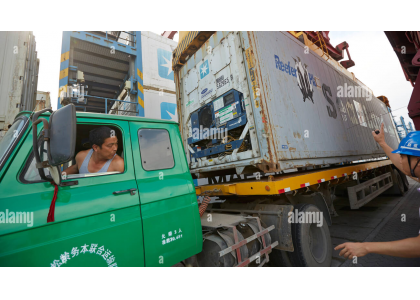
Iraq has become one of the fastest-growing destinations for Chinese used car exports — and the numbers are hard to ignore. In the first half of 2025, Iraq imported more than 180,000 used vehicles from China, a year-on-year surge of nearly 80% compared with roughly 100,000 units in the same period of 2024 (Sinovcle Global, Oct 2025). Within just two years, Chinese used cars have moved from a niche option to a mainstream choice in Iraqi showrooms, reshaping a market long dominated by Japanese brands. This article breaks down the forces behind the boom, what Iraqi buyers actually want, and the risks exporters must prepare for in 2026.
The 80% Story: What the Numbers Really Say
The headlines about an “80% share” actually trace back to an 80% surge in import volume. Public trade data shows Iraq took in over 180,000 used vehicles from China in just six months of 2025 — nearly double the pace of the same period in 2024. Put in wider context, China exported roughly 436,000 used passenger and commercial vehicles in 2024 (Reuters, Jun 2025), and its vehicle exports to the Middle East jumped 65% in 2025 to more than 584,000 units (Channel 8, Jun 2026). Iraq now rivals Russia and the UAE as one of the most important destinations for Chinese used cars.
The shift has rattled incumbents: reports indicate Toyota formally appealed to the Iraqi government to restrict imports of Chinese used cars older than five years — a clear sign of how quickly the competitive landscape has changed.
Why Chinese Dealers Are Winning: Price, Policy, and Products
Three structural advantages explain the surge. First, cost: under the China–Iraq Free Trade Agreement, Chinese vehicles enter Iraq with zero import tariffs, while Japanese used cars face roughly 15%–20% import duties plus higher freight costs. Second, specification: Chinese models are engineered for harsh climates, from high-performance air conditioning to dust-resistant components. Third, supply: China’s export pipeline can deliver price-competitive stock in volume and on schedule.
|
Factor |
Chinese used cars |
Japanese used cars |
|
Import tariff in Iraq |
0% (China–Iraq FTA) |
15%–20% |
|
Typical price gap |
15%–25% cheaper |
Benchmark pricing |
Zero Tariffs: The Policy Edge Behind the Boom
The policy backdrop is decisive in a market where GDP per capita is around USD 5,600 and buyers are highly price-sensitive. Under the China–Iraq Free Trade Agreement, Chinese vehicles enjoy zero import tariffs, which lowers landed costs by 15%–20% compared with Japanese rivals. Importers still pay 12% VAT and must obtain a Ministry of Commerce import license, which requires certification by the Iraqi Embassy in China. Working with an experienced exporter who handles licensing and documentation is therefore essential to keep the cost advantage intact.
What Iraqi Buyers Actually Want
Iraq’s climate — summer temperatures often above 45°C and frequent sandstorms — shapes demand. Best-selling Chinese models such as the Haval H6, BYD F3, and Geely Emgrand win buyers with fast-cooling A/C systems, dust-resistant materials, and heat-tolerant wiring. Notably, white vehicles make up more than 60% of Chinese used car exports to Iraq, because they stay cooler and look cleaner.
The demand base is enormous: Iraq’s car parc exceeds 8 million vehicles, with over 2.5 million in Baghdad alone, even though the city’s road network was designed for only 300,000 cars. Limited public transport after decades of conflict pushes households to private cars, and the auto parts market now exceeds USD 3 billion a year — creating follow-on opportunities for parts exports and after-sales services.
2026 Risks and New Rules on the Horizon
The boom has attracted regulatory attention. Iraq’s Ministry of Trade has drafted a new automotive import policy that aims to control total import volume, raise vehicle quality, and strengthen environmental and safety standards. From 2026, the government may restrict vehicles older than eight years, with possible exemptions for new-energy vehicles (NEVs). Combined with Toyota’s lobbying for stricter age limits, exporters should expect tighter compliance requirements rather than a return to open-ended growth.
Conclusion: A Market Built for Prepared Exporters
The Iraqi boom is not a flash in the pan — it reflects China’s rising competitiveness in global used car trade, from zero-tariff policy support to climate-tuned, affordable product lines. For exporters who pair the current cost advantage with quality stock, full documentation, and early preparation for 2026 rule changes, Iraq remains one of the most promising markets of the year. The dealers who win the next phase will be those who treat compliance as an investment, not an afterthought.


