How Much Does It Really Cost to Import a Used Car from China? Full 2026 Breakdown
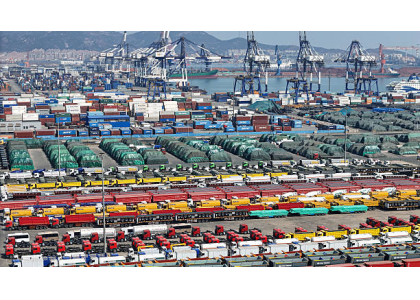
China has become the undisputed engine of the global car trade, and 2026 is the year its used car exports went mainstream. For importers and dealers the appeal is obvious: competitive FOB prices, a deep pool of late-model EVs and hybrids, and fast shipment times. But a 'cheap car' does not mean a 'cheap deal.' Between freight, insurance, duties, port fees and compliance, the total landed cost can run 30-50% higher than the online FOB price. This guide breaks down every dollar of the 2026 import process with up-to-date figures, so you can budget like a professional.
Why China Is the World's New Used Car Hub
China has overtaken every rival in the global car trade. In 2024 it became the world's largest car exporter, shipping 6.4 million vehicles (China Customs / Statista). New vehicle exports grew another 15% in 2025 to 4.95 million units, with Mexico, Russia and the UAE as top destinations (Automotive Logistics, Nov 2025). In June 2026, monthly exports topped one million units for the first time ever (The Guardian, July 2026).
Used car exports now reach buyers in more than 160 countries, backed by overseas warehouses and a tightened regulatory framework that has curbed 'zero-kilometer' loophole sales. This scale means deep supply - but also sharp competition. Knowing your real landed cost is what separates profitable importers from the rest.
The 2026 Cost Breakdown, Line by Line
Beyond the vehicle's FOB price, expect the following line items on every shipment:
|
Cost item |
Typical 2026 range |
Notes |
|
FOB vehicle price |
$3,000 - $25,000 |
Depends on brand, age, mileage and condition |
|
Ocean freight |
$1,200 - $2,500 |
RoRo or container, per unit to major ports |
|
Marine insurance |
$300 - $600 |
Roughly 0.5-1% of CIF value |
|
Import duty |
0% - 35% |
Destination-dependent (see next section) |
|
Port and inland handling |
$300 - $800 |
Terminal fees, customs broker, trucking |
|
Compliance and registration |
$700 - $1,500 |
Homologation, emissions, plates, taxes |
|
Total excluding car |
$3,500 - $6,000+ |
Guides confirm similar bands (CanadoExport 2026; ChinaCarDirect 2025) |
Sources: CanadoExport 2026 buyers' guide; ChinaCarDirect cost analysis (2025); U.S. CBP tariff schedule.
Duties by Destination: The Variable That Decides Your Margin
Import duty is the single biggest variable in your landed cost. Typical 2026 examples:
|
Market |
Typical duty |
Notes |
|
United States |
2.5% cars / 25% trucks |
Per U.S. CBP tariff schedule |
|
European Union |
~10% |
Plus VAT and type approval costs |
|
Russia and Central Asia |
Often 0-15% |
Popular routes for Chinese used cars |
|
Africa and Middle East |
5% - 35% |
Used passenger car duty often starts near 5% and can exceed 30% (AutoCango) |
Duty rates are indicative for 2026; confirm with the destination customs authority before quoting.
Real-World Example: Landed Cost of a $10,000 Used Car
Let's model a mid-size sedan (e.g., a 2020 Toyota Camry-class car) exported to a typical emerging market in 2026:
FOB price $10,000 + ocean freight and insurance $2,000 + import duty at 5% $500 + port handling and customs broker $500 + compliance and registration $900 = $13,900 landed, roughly +39% over FOB.
Ship the same car to a 30% duty market and the bill jumps to about $16,900. Destination selection is a pricing decision, not just a logistics one.
Hidden Costs First-Time Importers Miss
Port storage and demurrage after free days (often $50-150 per day);
EV battery surcharges on ocean freight - lithium battery classes cost significantly more;
Pre-export inspection and certification fees charged by the exporter;
Currency swings between CNY and your local currency during the 3-6 week transit window;
Destination homologation (e.g., GCC, EEC type approval) that can add $1,000-3,000;
'Zero-kilometer' risk - since China tightened used-car export rules in 2025-2026, always buy from licensed exporters with clean titles (InsideChinaAuto, July 2025).
How Smart Buyers Cut Costs Without Cutting Corners
Buy CIF (cost, insurance, freight) from one licensed exporter to bundle and control every line item;
Consolidate multiple units per container to slash per-car freight;
Avoid peak shipping seasons (Oct-Dec) to lock in better rates;
Verify vehicle history, VIN and battery health before making any payment;
Compare 2-3 exporters and demand itemized quotes - never accept a single lump 'all-in' price without a written breakdown.
Conclusion
Importing a used car from China in 2026 is profitable - but only if you budget the full landed cost. Plan on roughly $3,500-6,000 in fees above the FOB price, confirm duty rates before you buy, and work with licensed exporters who can document every line item. China's export machine keeps growing; make sure your margins grow with it.


