Ethiopia Used Car Import Regulations 2026: EV-Only Rules and How to Import from China
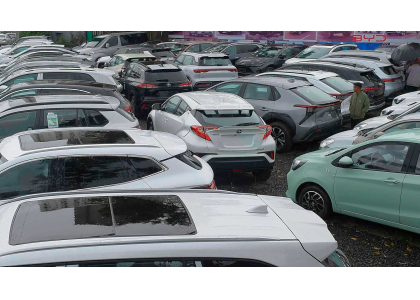
Ethiopia is the only country in the world that has banned the import of petrol and diesel cars. Since January 2024 every passenger vehicle entering the country must be electric - a decision that has turned Ethiopia into a pure battery-electric market where Chinese used EVs set the pace. For exporters, Ethiopia used car import regulations in 2026 come down to one thing: vehicle, paperwork and shipping route must all be built around battery-electric cars.
What Ethiopia's EV-Only Rule Means for Importers
· The combustion-engine import ban has been in force since January 2024, making Ethiopia the first country to prohibit imports of internal combustion engine vehicles (source: US International Trade Administration / trade.gov, July 2025).
· Only fully electric vehicles (BEVs) qualify for the EV import incentives. Hybrids and plug-in hybrid electric vehicles are excluded (Energy Solutions Intelligence country tracker, updated 27 August 2026).
· Both new and used EVs are eligible, provided the vehicles meet Ethiopia's safety and environmental standards and the importer is registered with the Ethiopian Customs Commission (same source).
· Left-hand drive is mandatory. Ethiopia drives on the right, so RHD stock sourced for Kenya or Japan does not fit this market.
· Official targets: 500,000 EVs on the road within a decade and the replacement of 95% of fuel-powered vehicles (trade.gov, July 2025).
The Demand Numbers Dealers Should Know
|
Metric |
Latest figure |
Source |
|
EVs on Ethiopian roads |
115,000+ (about 8% of the national fleet) |
AP via Yale Climate Connections, May 2026 |
|
Africa's EV imports from China, 2025 |
44,358 units, up from 19,386 in 2024 |
China Commerce Ministry data via AP |
|
Ethiopia's share of those imports |
Roughly one third |
AP via Yale Climate Connections, May 2026 |
|
Annual fuel import bill |
About $4.2 billion; $128m monthly fuel subsidies |
Ethiopian trade ministry statement via AP |
|
Running cost per private EV |
About $4 a month charging vs about $27 on fuel |
Africa E-Mobility Alliance |
Duties and Taxes on Imported Electric Vehicles
Ethiopia's tax treatment of EVs is generous but it changes often, so treat the table below as a starting point rather than a quote.
|
Charge |
Treatment for battery-electric vehicles |
Source |
|
Import (customs) duty |
0% under the duty-free EV regime; IEA's policy record still shows 15% for fully-built EVs in 2023, raised to 20% in 2024 - verify before shipping |
ESI tracker, 27 Aug 2026; IEA policy record |
|
Excise tax |
Exempt |
IEA policy record |
|
VAT |
Exempt |
IEA policy record |
|
Surtax |
Exempt |
ESI tracker, 27 Aug 2026 |
|
ICE vehicles (for comparison) |
Duties of up to 35% |
ESI tracker, 27 Aug 2026 |
Because the regime is revised frequently, confirm the tariff code and exemptions for your exact model with the Ethiopian Customs Commission before payment.
Left-Hand Drive, Charging Spec and Document Checklist
Before booking freight, confirm every item below in writing with your Chinese supplier:
· Left-hand-drive configuration, confirmed on the vehicle documentation.
· Battery health report and full charging test (AC slow charge plus DC fast charge).
· Charging compatibility: input voltage, connector type and whether a portable cable is included.
· VIN list matching invoice and bill of lading, plus photos taken at the pre-shipment inspection.
· Import licence, import registration and Tax Identification Number (TIN) on the Ethiopian side.
· A spare-parts package ordered with the vehicles, since local EV parts supply is still thin.
Shipping Route: China to Djibouti to Ethiopia
Ethiopia is landlocked, so nearly all vehicle cargo enters through the Port of Djibouti before moving inland by truck. Tianjin, Shanghai and Shenzhen handle the ocean leg, using roll-on/roll-off or container shipping - containers suit higher-value EVs and mixed loads. Because EVs carry high-voltage lithium batteries, carriers usually request extra battery documentation before accepting a booking. The common mistake is budgeting only China-Djibouti ocean freight: Djibouti port charges, transit paperwork and the inland leg to an Ethiopian dry port all belong in the landed cost.
Which Used EVs Fit the Ethiopian Market
City and ride-hailing buyers in Addis Ababa prioritise range, charging speed and a low purchase price, while regional operators need ground clearance and durable suspension. LFP packs are popular for their lifespan, and cell health matters far more than cosmetic condition. Two EVs currently in stock illustrate the two ends of that demand: the
Used Car BYD Hiace 07 EV 2025 Model 610 Smart Driving Edition is a 610 km pure-electric SUV aimed at buyers who need real range, while the
Used Car 2025 Xiaomi YU7 Ultra-Long Range AWD MAX Edition covers the premium end of the same market.
Infrastructure is improving but unevenly. Ethiopia's EV Charging System Directive (No. 1034/2024) requires fast chargers every 50 km and heavy-duty charging every 120 km along major corridors, and makes charging stations a market-entry condition for importers and assemblers (trade.gov). In practice the network is still concentrated in the capital, where grid connections slow rollout.
What to Watch in the Second Half of 2026
· Fuel supply shocks keep pushing adoption: Ethiopia frames EVs as a buffer against imported-fuel volatility.
· Local assembly is scaling - 17 EV assembly plants are in the pipeline with a target of 60 by 2030 - which will eventually pressure new-EV pricing and strengthen the case for imported used units today.
· Tax rules move: confirm duty, excise and VAT treatment for each shipment instead of reusing an old landed-cost sheet.
Conclusion
Ethiopia remains the world's clearest EV-only import market. For exporters, the winning formula is straightforward: left-hand-drive battery-electric stock, documented battery health, a registered Ethiopian importer, and a landed-cost model that includes the Djibouti corridor. Dealers who treat Ethiopia used car import regulations as a checklist rather than a formality will move stock faster than those who discover the rules at the port.


