Chinese Used Cars in Saudi Arabia 2026: Rising Demand and Import Guide
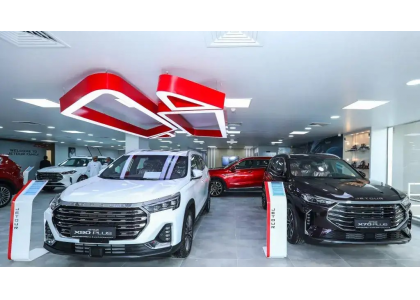
Saudi Arabia is the largest used car market in the Middle East and Africa, and in 2026 it is the market where Chinese brands are gaining ground fastest. For dealers and fleet buyers, that combination — deep local demand plus a fast-rising supply of affordable Chinese models — makes the Kingdom the region’s strongest import opportunity. This guide covers the numbers, the five-year age rule, landed costs and the import process.
Why Saudi Arabia Leads the Region’s Used Car Market
Mordor Intelligence values the Middle East and Africa used car market at USD 93.01 billion in 2025 and USD 97.87 billion in 2026, and projects it to reach USD 126.34 billion by 2031, a 5.23% CAGR. Saudi Arabia alone accounted for 34.20% of that market in 2025 — more than any other country in the region.
Three structural factors keep pushing Saudi buyers toward used stock:
· Red Sea shipping disruption extended new-vehicle delivery lead times by up to six weeks, and rising new-car prices pushed price-sensitive buyers into the used market.
· Distributor inventories of popular models stayed tight for four to six months, so buyers looked at used alternatives they would previously have ignored.
· SUVs and crossovers took 42.72% of regional used-car revenue in 2025, while battery-electric vehicles are the fastest-growing fuel class at a 9.92% CAGR through 2031.
Chinese Brands Are the Only Winners in a Contracting Saudi Market
Saudi Arabia’s new-vehicle market has been shrinking, yet two Chinese marques were the only brands in the country’s top ten to grow in the first half of 2026: Haval rose 48% and Jetour 22.6%, even as the overall market fell 23.5% year on year.
That local result mirrors the export picture. China’s passenger vehicle exports jumped 77.5% year on year to 894,000 units in August 2026, and the China Passenger Car Association forecasts 12 million vehicle exports for the full year. China’s auto exports to the Middle East alone passed 1.25 million units in 2025, up more than 30%.
Mordor Intelligence names the “influx of affordable Chinese brands” as a driver adding 0.9 percentage points to regional used-car market growth, with relevance concentrated in the GCC and Egypt. The practical effect matters more than the statistic: Chinese nameplates are now familiar to Saudi workshops, which lowers perceived ownership risk and lifts resale liquidity.
Saudi Arabia’s Five-Year Rule in 2026
Saudi Arabia restricts used passenger car imports by age. Vehicles must be no more than five model years old, and the current model year is excluded from the count, so the oldest eligible model year for a 2026 import is 2021.
|
Calendar year of import |
Oldest eligible model year |
Newest eligible model year |
|
2026 |
2021 |
2025 |
|
2025 |
2020 |
2024 |
|
2024 |
2019 |
2023 |
Two further requirements apply: vehicles must be left-hand drive, and machinery or non-passenger units have a longer ten-year window.
Chinese Models That Fit the Saudi Rule in 2026
|
Model |
Segment |
Why it fits the Saudi market |
|
Haval H6 (2021) |
Compact SUV |
SUV demand dominates; Haval grew 48% in H1 2026 |
|
Jetour Traveller (2023) |
Mid-size SUV |
Jetour grew 22.6%; boxy body suits desert use |
|
BYD Hiace 07 EV (2025) |
Electric SUV |
BEV is the fastest-growing fuel class in MEA |
Two units currently listed by Tianjin Yijie Automobile show the pattern in practice: the Used Car 2021 Haval H6 Guochao Edition – Urban Edition sits exactly on the edge of the 2026 five-year window and matches the SUV segment that dominates regional demand, while the Used Car 2023 Jetour Traveller Discovery Pro 1.5T carries the badge of the fastest-growing Chinese marque in the Kingdom.
What Importing Actually Costs
Saudi Arabia levies a 5% customs duty on the CIF value of the vehicle. For used cars the assessed value is first discounted for age by 10% per year, to a maximum discount of 50%. VAT is then charged at 15% on the total of vehicle value, duty, freight and insurance, giving a combined effective load of roughly 20.75% of CIF before shipping and clearance fees.
· Customs duty: 5% of the age-adjusted CIF value.
· VAT: 15% on vehicle, duty, transport and insurance combined.
· Add RoRo freight from Tianjin or Shanghai to Jeddah or Dammam, marine insurance, port handling and clearance fees, then inland transport to the buyer.
How to Import Chinese Used Cars to Saudi Arabia: Step by Step
1. Check the age window before paying a deposit — a 2020 model cannot clear customs in 2026.
2. Inspect the unit: verified mileage, no flood or structural damage, and a battery health report for any electric vehicle.
3. Assemble the paperwork: commercial invoice, bill of lading, certificate of origin and export licence from a registered Chinese exporter.
4. Book RoRo shipping early. With Chinese exports at record volumes, vessel space fills quickly.
5. Clear customs, pay duty and VAT at the port, then complete SASO conformity and registration.
6. Budget the last mile: inland transport, temporary plates and dealer margin.
Conclusion
Saudi Arabia combines the region’s largest used car market with its fastest-growing Chinese brand presence. The winning strategy for 2026 is narrow rather than broad: source well-specified SUVs from 2021 or newer, buy from an exporter that documents battery health and mileage, and price the 5% duty and 15% VAT into your landed cost from day one.


