China's New EV Battery Health Rules 2026: What Used Car Exporters Must Know
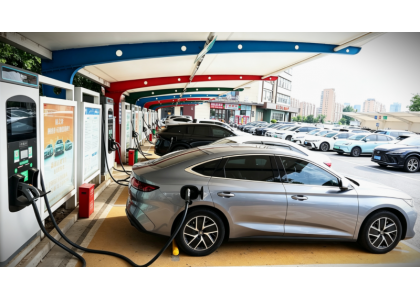
On August 2, 2026, China disclosed implementation details of GB/T 46991.1-2025, a recommended national standard for electric vehicle (EV) battery health display systems in light-duty passenger cars. The rules cap dashboard battery-health error at 5% and set clear durability benchmarks based on vehicle age and mileage. For used car exporters, this is more than a technical footnote: battery condition is the single biggest trust barrier in second-hand EV deals. Standardized, verifiable battery health data gives exporters a powerful sales tool and protects buyers in markets such as the Middle East, Russia, Africa and Southeast Asia. Here is what the new rules say and how to use them in your 2026 export strategy.
What Is GB/T 46991.1-2025?
Developed under China's Ministry of Industry and Information Technology (MIIT) and the Standardisation Administration of China (SAC), GB/T 46991.1-2025 specifies how automakers must measure and display battery health for light-duty passenger EVs. It is a recommended national standard, not a mandatory safety regulation, so there are currently no public penalties for exceeding its limits. It also sits apart from the mandatory safety standard GB 38031-2025, which governs battery safety such as thermal-runaway protection. In short, GB/T 46991.1-2025 is the measurement-and-disclosure rulebook that makes battery condition comparable across vehicles.
The 5% Display Accuracy Rule
The core requirement targets State of Available Energy (SOCE), the ratio of a battery's current available energy to its energy when new. Unlike State of Charge (SOC), which reflects remaining energy during driving, SOCE tracks long-term capacity retention - the number buyers actually care about. Under the rule, the relative deviation between the SOCE shown on the vehicle display and the physically measured value must not exceed 5%.
The standard also introduces Virtual Mileage: non-driving energy consumption (parked systems, accessories) must be converted into an equivalent distance, with a maximum 3% deviation from measured results. This prevents dashboards from hiding battery drain in ways that flatter health readings.
Battery Durability Benchmarks
The rules define minimum SOCE retention levels based on vehicle age and mileage. For example, a battery with 100 kWh of original available energy should retain at least 82 kWh after five years and 100,000 km. These benchmarks give exporters a neutral yardstick when inspecting, pricing and describing used EVs to overseas buyers.
|
Vehicle Age |
Mileage Baseline |
Minimum SOCE |
|
5 years |
100,000 km |
82% |
|
8 years |
160,000 km |
75% |
|
10 years |
200,000 km |
70% |
What It Means for Used EV Exporters
1. Credible health reports: buyers in import markets increasingly ask for battery health certificates. GB/T 46991.1-2025 gives you a common framework to request from suppliers and share with customers.
2. Fairer pricing: SOCE-based data lets you price by real capacity retention rather than mileage alone. A 2022 EV at 85% SOCE is worth more than one at 72%.
3. Fewer disputes: aligned measurement methods reduce post-delivery arguments over battery condition and warranty claims.
4. Competitive edge: most Chinese used-car sellers do not yet lead with battery data. Doing so differentiates your offer.
One caveat: because the standard is recommended, adoption varies by automaker. Ask suppliers which vehicles comply, and verify key units with third-party tests.
Market Context: Why Battery Health Matters More Than Ever
Two trends make this timely. First, scale: China's passenger NEV retail sales are forecast at about 1.04 million units in August 2026, with penetration possibly hitting a record 65.8% (CPCA, via CnEVPost, Aug 21, 2026). A growing domestic EV pool means more used EVs entering the export pipeline every year. Second, cost: CATL now sells LFP storage cells directly at about 63 USD/kWh on its CATL Mall platform (CarNewsChina, Aug 23, 2026). Cheaper batteries lower replacement costs, which reshapes residual-value math and makes transparent health data even more important for used EV pricing.
How Exporters Can Prepare
Request SOCE-based health reports from sourcing partners for every used EV unit.
Prioritize vehicles meeting the 5-year/82% and 8-year/75% benchmarks for long-term buyers.
Use third-party battery testing for high-value units before shipment.
Build warranty terms around measured capacity retention, not just age and mileage.
Educate buyers: explain that GB/T 46991.1-2025 improves transparency in China's used EV supply.
Conclusion
China's battery health rules for 2026 turn battery condition from a vague claim into a measurable, comparable number. For used car exporters, early adoption is a real advantage: more credible reports, fairer prices and stronger buyer trust in competitive markets. The standard is recommended today, but it signals where regulation - and buyer expectations - are heading. Exporters who standardize battery health data now will be the ones winning deals when it becomes the norm.


