China's 2026 EV Subsidy Phase-Out: What It Means for Used Electric Cars from China
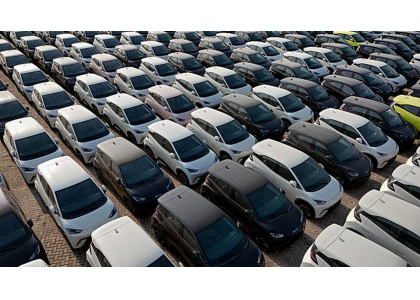
China has begun dismantling the tax incentives that made its electric vehicles the cheapest in the world. A new 2% consumption tax on lithium batteries took effect on September 1, 2026, the long-running purchase-tax exemption for new-energy vehicles (NEVs) was replaced by a 5% levy in January 2026, and remaining vehicle-and-vessel tax breaks are scheduled to disappear in 2027. For international dealers and fleet buyers, one question matters most: does the subsidy phase-out make used electric cars from China pricier - or relatively more attractive? Here is the policy, the price math, and the buying strategy for 2026.
What China Is Phasing Out - and When
The changes come in three waves, and they apply to every EV built in China - Tesla, Volkswagen and Toyota included (Source: CarNewsChina, Sep 4, 2026).
|
Measure |
Timeline |
What changes |
|
NEV purchase tax |
From Jan 1, 2026 |
100% exemption replaced by a 50% reduction; effective rate 5%, capped at CNY 15,000 (~USD 2,200) per vehicle. |
|
Lithium battery consumption tax |
From Sep 1, 2026; 4% from Sep 1, 2027 |
New 2% levy ends a 10+ year exemption; sodium-ion, solid-state and fuel cells stay exempt to at least end-2028. |
|
Vehicle-and-vessel tax |
From Jan 1, 2027 |
50% reduction for energy-saving cars and exemptions for BEV commercial, PHEV and EREV vehicles withdrawn (announced Jul 3, 2026). |
The Price Math: Why Used EVs Still Look Like the Smart Deal
The direct cost of the phase-out is real but modest. With domestic 314Ah LFP cells averaging about CNY 0.365/Wh in August 2026, a 60 kWh battery pack adds roughly CNY 438 (USD 62) to a new EV at the 2% rate and CNY 876 (USD 125) once the tax doubles in 2027. The purchase tax adds up to CNY 15,000 on a new NEV, and the 2026 trade-in program narrowed its support for models priced below CNY 150,000 (Source: CarNewsChina; gov.cn, Dec 31, 2025).
None of this pushes list prices up one-for-one - Chinese brands are still competing hard at home, and Beijing warned carmakers in early September against exporting their domestic price war abroad (Source: Reuters, Sep 1, 2026). But the cost base of a brand-new EV is edging up precisely when the used market is overflowing with 2024-2025 stock. A one-to-three-year-old electric car that already absorbed registration and first-year depreciation now widens the value gap over its showroom equivalent - which is why dealers are increasingly sourcing used electric cars from China instead of paying new-car prices.
Used EV Supply Is Rising as Export Channels Mature
The domestic used-NEV pool is growing quickly: transactions reached 1.6 million units in 2025, equal to 7.9% of all used-car sales in China and up 2.2 percentage points year on year (Source: People’s Daily, Jan 14, 2026). At the same time, the export side has been professionalised - vehicles must be registered in China for at least 180 days before export, export permits are required, and battery-health disclosure standards are raising buyer confidence in second-hand EVs.
For overseas buyers this means a compliant pipeline of verifiable, nearly-new EVs - from a 610 km-range pure electric SUV such as the BYD Hiace 07 EV 2025 610 Smart Driving Edition to a family extended-range SUV like the 2024 Li Auto L6 Max, both available now with export documentation from Tianjin.
Global Demand Keeps Climbing - Especially in Africa and the Middle East
The International Energy Agency expects EVs to reach almost 60% of China’s own car sales in 2026, and its Global EV Outlook shows Chinese-made EVs accounting for more than 80% of electric-car imports in many Latin American, Middle East and African markets; outside the EU and US, China supplied 55% of EV sales in 2025, up from about 10% in 2021 (Source: IEA Global EV Outlook 2026).
On the supply side, China exported 7.098 million vehicles in 2025, up 21.1%, with NEV exports doubling to 2.615 million units (Source: CAAM). In the first half of 2026 exports reached 5.31 million, up 53% year on year, with monthly volumes above one million (Source: China Daily, Aug 14, 2026). As incentives shrink at home, a growing share of that global supply will flow through the used and nearly-new channel - undercutting Japan- and Europe-sourced stock on price while meeting import-age rules in markets such as Nigeria, Ghana and the Gulf.
What Importers Should Do in 2026
· Treat the phase-out as a sign of policy maturity, not a reason to wait: the new-car cost base is rising while used EV prices remain competitive.
· Lock FOB quotes for 2025-2026 stock now. Ask every supplier for the battery-health report, the 180-day registration proof and the export permit before signing.
· Prefer exporters with physical stock and full documentation - the verified units listed above are examples of what a compliant shipment looks like.
· Watch 2027: the vehicle-and-vessel tax change mainly raises running costs for PHEVs and EREVs inside China and has little direct effect on export pricing.
Conclusion
The 2026 phase-out removes the last big subsidies that made brand-new Chinese EVs artificially cheap. For buyers of used electric cars from China, the practical effect is positive: supply is deeper, quality standards are higher, and nearly-new EVs remain the sharpest value in global trade. Move while 2024-2025 stock is still available at today’s prices.


