China Used Car Exports to Kazakhstan in 2026: Horgos Record, Routes and Costs
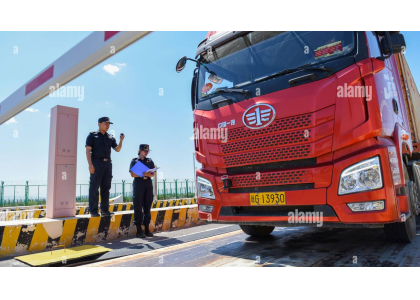
China used car exports to Kazakhstan are hitting records in 2026. Dealers in Almaty and Astana took roughly 19,000 used vehicles from China in the first half of the year - up 40% year on year and enough to make Kazakhstan the fifth-largest destination for China’s used car exports, according to China Automobile Dealers Association (CADA) and customs data cited by SinoAutoCars.
The boom rides on a logistics milestone: Horgos port in Xinjiang exported 219,000 vehicles in H1 2026, up 25.7%, its best first half on record. For exporters, the Kazakhstan corridor has moved from niche route to mainstream option.
Horgos Port Posts a Record First Half
Horgos (Khorgos), the main land gate between China and Kazakhstan, exported 219,000 vehicles from January to June 2026 - a first-half record and a 25.7% rise, according to Guazi’s port review. Over 1,000 vehicles now leave the port daily. In full-year 2025, 450,000 vehicles crossed here, including 201,000 new-energy vehicles.
Customs has made the corridor faster with round-the-clock clearance, streamlined inspections and a fast track for self-drive exports, reporting an 80% gain in clearance efficiency. The route mainly serves Kazakhstan and Uzbekistan, extending to more than 10 Belt and Road markets in West and Central Asia and Eastern Europe. Shorter border dwell time means lower storage costs and more predictable delivery for used car buyers.
Why Kazakhstan Is Climbing the Export Ranking
China’s used car exports reached about 305,000 units in H1 2026, up 8% year on year (CADA/GACC data via SinoAutoCars). Overall growth has cooled, but Central Asia runs hot: Kazakhstan rose 40% to 19,000 units, while Uzbekistan jumped 120% to 16,500.
Two shifts explain it. Quality first: after the November 2025 ban on “zero-kilometer” exports and the January 2026 180-day rule, genuine used cars are now about 75% of exports, average CIF prices climbed 22% to $12,800 and NEVs reached 47% of volume. Demand second: Kazakh dealers increasingly want mid-size SUVs and electrified models, where Chinese brands offer the strongest value.
Routes and Costs Compared (2026)
Guazi Logistics Network’s dealer guide (updated July 2026) compares four door-to-door options for a standard 1.5-2.0 L used SUV or sedan, all including China-side export clearance:
|
Route |
Transit time |
Cost per car (USD) |
Best for |
|
Rail via Khorgos / Alashankou |
12-18 days |
$2,800 - 3,200 |
Bulk orders (3+ cars) |
|
Road (FTL truck) |
10-15 days |
$5,500 - 6,500 |
Small lots, urgent stock |
|
Sea + rail via Aktau |
25-35 days |
$2,500 - 3,200 |
Large volume (10+ cars) |
|
Air freight |
3-6 days |
$12,000+ |
Luxury or urgent only |
Rail is the sweet spot for most dealers, saving roughly $2,300-3,300 per car versus road trucking. Budget extra per vehicle for transit insurance ($150-300), customs brokerage in Kazakhstan ($150-250), rail gauge or border handling ($80-150) and last-mile delivery ($200-500) - about $3,200-4,200 all-in on the rail route. Dealers shipping 5-10 cars a month report typical rail delivery near 14 days. Book between April-June or September-November to avoid border queues.
Import Rules: Check Before You Ship
· Left-hand drive only - right-hand drive vehicles are not accepted in Kazakhstan.
· Euro 4 emissions minimum - anything below is refused entry.
· SBKTS (EAEU vehicle safety certificate) is mandatory before a used car can enter Kazakhstan.
· Private individuals may import one car per year; commercial importers must use licensed dealer channels.
· Duty and tax stack: customs duty 15%, VAT 16% and a recycling fee (756,875 KZT for 1.5-2.0 L engines, 2026) apply on top of landed cost.
· On the China side, cars must be registered for more than 180 days to ship under the standard export license (the “180-day rule” in force since January 2026).
Rates and fees change, so confirm current figures with a licensed customs broker before booking (sources: Guazi dealer guide; Kazakhstan kgd.gov.kz / egov.kz references).
Which Cars Fit the Kazakhstan Corridor
Left-hand-drive sedans, family SUVs and electrified models dominate dealer orders. Extended-range (EREV) SUVs are the most liquid: Guazi notes REEV models such as Li Auto sell fastest in Kazakhstan and carry lower recycling fees - ideal for long distances and cold winters. The 2024 Li Auto L6 Max Extended Range SUV is an export-ready example: a premium five-seat EREV with a long combined range.
Pure-electric demand is also climbing as NEVs approach half of China’s used-export mix. The BYD Hiace 07 EV 2025 - a mid-size smart-driving BEV with a 610 km edition - suits buyers chasing low running costs. Budget-focused buyers still favor economical sedans such as the Toyota Yaris L 2022. Tianjin Yijie provides inspection reports and full export documentation for corridor-bound orders.
What This Means for Exporters in 2026
Full-year 2026 used car exports are forecast at 620,000-660,000 units, with NEVs near 50% of volume by Q4 (SinoAutoCars outlook). Kazakhstan and Uzbekistan are climbing destination rankings faster than almost any other market, and the Horgos corridor makes small-batch replenishment economical. Winners will combine compliant stock - 180-day rule, left-hand drive, Euro 4 - with the right route for each batch size.


