China's Used Car Export Boom: 2026 Market Trends Every Dealer Should Know
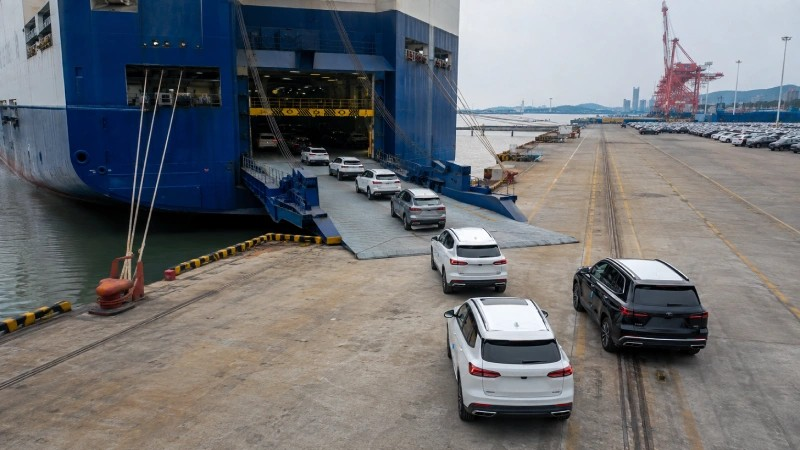
China's used car export industry has grown from a small pilot program into a global force in just a few years. In 2024, exports topped 436,000 units, up 46.5% year over year, worth USD 9.21 billion and reaching more than 160 countries and regions. As domestic new-car demand cools in 2026, overseas markets have become the industry's most important growth engine. For dealers and importers worldwide, understanding where this boom is heading is no longer optional - it is essential to staying competitive. Here are the key trends shaping China's used car export market in 2026.
Record Volumes: From Pilot to Global Powerhouse
The used car export pilot program began in 2019 with a small number of licensed companies. Since then, volumes have climbed almost every year. According to China Automobile Dealers Association (CADA) data reported by Xinhua, 2024 used car exports exceeded 436,000 units, a 46.5% jump year over year, with an export value of USD 9.21 billion.
Domestically, the market hit a historic milestone in 2025: used car transactions surpassed 20 million units for the first time, while new energy vehicle (NEV) used car transactions reached 1.6 million units, about 7.9% of the total (CADA, January 2026). At the same time, China's overall vehicle exports reached a record 7.098 million units in 2025, up 21.1% year over year (China Association of Automobile Manufacturers, CAAM). The export pipeline feeding global markets has never been deeper.
2026 Outlook: New-Car Exports Slow, Used Cars Accelerate
Growth is not uniform. CAAM projects that China's total vehicle exports will expand only 4.3% in 2026, a sharp slowdown from the 21.1% growth recorded in 2025. Domestic demand remains under pressure: total industry shipments fell 4.1% year over year to 15.0 million units in the first half of 2026, and July passenger car sales dropped 21.1% year over year (Reuters, August 2026).
This combination is pushing more Chinese dealers, OEM channels and trading companies toward used car export as a higher-margin outlet for surplus inventory. The key figures are summarized below.
|
Indicator |
Figure |
Source |
|
China vehicle exports 2024 |
5.86 million units |
CAAM |
|
China vehicle exports 2025 |
7.098 million units (+21.1%) |
CAAM |
|
China used car exports 2024 |
436,000+ units (+46.5%); USD 9.21B |
CADA / Xinhua |
|
Domestic used car transactions 2025 |
20 million+ units |
CADA |
|
NEV used car transactions 2025 |
1.6 million units (7.9% of total) |
CADA |
|
2026E vehicle export growth |
~4.3% |
CAAM projection |
NEVs Lead the Export Wave
New energy vehicles are the strongest driver of the boom. China produced and sold more than 16 million NEVs in 2025 (CAAM), and used NEVs now offer emerging-market buyers a compelling price-performance combination compared with new cars. Industry sources report steadily rising inquiries for brands such as BYD and Chery across the Middle East, Central Asia, Africa and Latin America (Shupeng Auto market insights, January 2026).
The supply side supports this trend: 1.6 million NEV used car transactions in 2025 mean a growing pool of late-model electric and plug-in vehicles entering the export channel. Battery health reports, charging compatibility and certified range data are becoming decisive factors in purchase decisions.
Exporters should also note that used EVs require dangerous-goods handling for lithium batteries during sea freight, which adds a layer of logistics complexity - and a competitive edge for suppliers who manage it professionally.
Quality Transparency and Compliance Are Table Stakes
Low price alone no longer wins orders. Buyers increasingly demand third-party inspection reports, reconditioning records and visible condition details before committing to a purchase. The exporters winning long-term relationships in 2026 are those who make quality transparent rather than merely claiming it.
Regulatory rigor is also rising. Chinese authorities have been closing loopholes around 'near-new' vehicles exported as used cars, tightening documentation and title requirements. Meanwhile, destination countries are enforcing stricter homologation, emissions and import rules. Working with a licensed exporter that manages compliance end to end - export plates, paperwork, customs and shipping - has shifted from convenience to necessity.
What Dealers Should Do in 2026
Based on current market signals, successful buyers and dealers should focus on:
· Partner with licensed China used car exporters for compliant, auditable paperwork.
· Build NEV inventory with verified battery health and inspection reports.
· Diversify destination markets: Middle East, Central Asia, Africa, Latin America and ASEAN.
· Prioritize logistics reliability - RoRo capacity and container EV shipping slots remain tight.
· Use transparent condition data as a sales tool to win repeat orders and referrals.
Conclusion
China's used car export boom is entering a new phase in 2026: volume growth continues, but the winners will be determined by NEV readiness, quality transparency and supply chain efficiency rather than price alone. With domestic demand soft and new-car export growth slowing, the used car channel is becoming the most dependable route for Chinese vehicles to reach global buyers. Dealers who adapt now will capture the strongest share of this market.


