China's Car Exports Top 1 Million Vehicles a Month: What Used Car Exporters Must Know in 2026
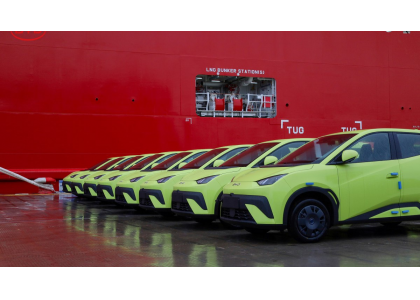
June 2026 delivered a historic milestone for China's auto industry: monthly vehicle exports surpassed 1 million units for the first time ever. According to the China Association of Automobile Manufacturers (CAAM), China exported 1.037 million vehicles in June, a 75.1% jump year on year, bringing first-half exports to 5.096 million units, up 65.3% (CarNewsChina, July 2026). For used car exporters and overseas dealers, this is far more than a headline. Record new-car shipments are reshaping vehicle supply, NEV availability, and demand patterns in exactly the markets where used Chinese cars are sold. Here is what the numbers mean for your business in 2026.
1. The Record in Numbers
The June figure was no one-off spike. China has now been the world's largest auto exporter for three consecutive years, shipping 7.098 million vehicles in 2025, up 21.1% (China Daily, August 2026). Key data points at a glance:
|
Metric |
Value |
Source |
|
June 2026 total exports |
1,037,000 vehicles (+75.1% YoY; first month above 1 million) |
CAAM via CarNewsChina |
|
H1 2026 total exports |
5,096,000 vehicles (+65.3% YoY) |
CAAM via CarNewsChina |
|
June 2026 NEV exports |
523,000 units (+160% YoY; 50.4% of monthly total) |
CAAM via China Daily |
|
H1 2026 NEV exports |
2,355,000 units (+120% YoY) |
CAAM via China Daily |
|
2025 full-year exports |
7,098,000 vehicles (+21.1% YoY) |
CAAM via China Daily |
|
H1 2026 exports to BRI markets |
US$83.67 billion (+30.8%; 57.5% of export value) |
CAAM/Customs via China Daily |
2. Why a New-Car Export Record Matters for Used Car Exporters
Every record month of new-car exports signals a deeper pool of trade-in and replacement vehicles back home. Meanwhile, the domestic market remains under pressure: H1 domestic sales fell 21.1% to 9.9 million units amid an intense price war (Caixin, July 2026), pushing newer, low-mileage stock into wholesale and export channels. For buyers, that means a growing selection of one-to-three-year-old vehicles - including NEVs barely off the showroom floor - at increasingly competitive FOB prices. Combined with China's 180-day registration rule, which keeps genuine used stock flowing, exporters today can access the deepest inventory pool in the industry's history.
3. NEVs Are Half the Exports - and Half Your Opportunity
For the first time, every second vehicle exported from China in June was an NEV. In H1 2026, NEV exports reached 2.355 million units, more than double the year-earlier figure. BYD alone exported 769,300 NEVs, taking a 34.5% share of China's NEV export market, while Chery led all exporters with 943,800 vehicles (China Daily). Affordability drives the trend: BYD Seagull exports reached 112,739 units and the Yuan Up 103,951 units in H1. Used NEVs ride the same wave. Chinese electric cars are now sought-after export stock - see our used BYD Hiace 07 EV 2025 610 Smart Driving Edition with its DiPilot 300 assisted-driving system - and premium extended-range SUVs remain among the most-requested vehicles in wholesale enquiries.
4. Where the Cars Are Going: BRI and Emerging Markets Lead
Belt and Road Initiative markets have become the largest destination for China's auto exports: US$83.67 billion in H1 2026, up 30.8%, or 57.5% of total export value (China Daily). Vehicle demand grew 35% in Vietnam, 15% in Thailand and 10% in Russia in the first five months of 2026 (OICA data via CarNewsChina). These are exactly the markets where used Chinese cars - from NEVs to fuel-efficient compacts - are displacing older Japanese stock. Fuel-efficient urban models remain dependable export workhorses; our 2022 Toyota Yaris L Leading Edition is a typical example of the budget segment BRI buyers request most.
5. Five Steps Buyers Should Take Now
· Source through licensed exporters that comply with China's 2026 export rules, including the 180-day registration requirement.
· Request third-party inspection and, for EVs, a battery-health report before committing.
· Compare FOB and CIF quotes; RoRo carrier space is tightening as export volumes surge, so book shipping early.
· Verify your destination's import rules: vehicle age limits, steering side, tariffs, and any EV incentives or restrictions.
· Insist on complete documentation: customs declarations, origin certificates and export licences.
6. Headwinds to Watch in H2 2026
Growth may moderate in the second half of the year. Experts point to EU carbon tariffs and anti-subsidy investigations, plus a high comparison base from late 2025 (CarNewsChina). US tariffs continue to redirect Chinese exports toward emerging markets. For used car exporters focused on Africa, the Middle East and Asia, however, the demand picture remains positive - and the record new-car wave only deepens the used inventory available to global buyers.
Conclusion
China's first single-month export volume above 1 million vehicles is a landmark for the whole industry - and a strong signal for anyone importing used cars from China. Deeper NEV supply, expanding emerging-market demand and competitive pricing make 2026 one of the best years to buy. The key is working with an experienced, licensed exporter that provides inspected stock, full documentation and transparent pricing.


