Car Shipping from China 2026: RoRo vs Container Costs and Transit Times
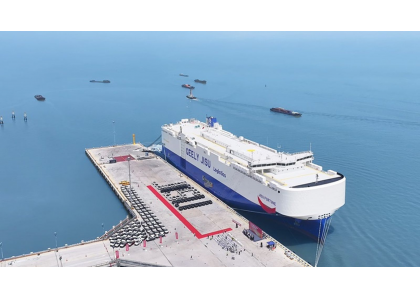
Freight is the number every importer is watching in 2026. Chinese passenger-car exports from East Asia reached 8.5 million units in the twelve months to mid-2026, up 72% year on year, while Western-market exports fell 13% (Wallenius Wilhelmsen Q2 2026 results, August 2026). Carriers cannot absorb that shift: rates have climbed and containers now carry millions of vehicles. This guide covers what car shipping from China costs, how RoRo compares with container shipping, and the transit times to plan for.
Why Car Shipping Rates From China Are Rising in 2026
Flows and rates moved the same way this year:
· RoRo fleet capacity grew 18.7% from Q1 2025 to mid-2026, and 32% since end-2021, yet the gap against Chinese export volumes widened.
· Between 2 and 4 million vehicles a year now move outside the RoRo fleet, by container, lift-on/lift-off or landbridge.
· One-year charter rates for 6,500 CEU car carriers hit about US$90,000 per day by July 2026, 88% above the trough.
· Asia-Europe spot rates climbed 79% to more than US$160 per cubic metre by September 2026, and newbuild slots are booked out to 2030.
· Bunker prices spiked near US$2,000 per tonne in early 2026, and fuel surcharges recover with a lag of two to four months.
Book early and add a fuel-surcharge buffer to every landed-cost quote: carriers reported 2026 volumes sold out.
RoRo vs Container: Which Method Fits Your Order?
The ocean rate alone is the wrong comparison. RoRo sails mainly from Shanghai and undercuts container freight by roughly US$200 per unit at sea, but from South China you pay the inland leg first, so the container usually wins all-in. Figures below are September 2026 planning references, not quotations.
|
Factor |
RoRo |
Container (40ft FCL) |
|
Loading method |
Driven on and off a car carrier |
Secured inside a sealed container |
|
Capacity |
Per unit |
3-4 sedans/SUVs; up to 6 small cars |
|
West Africa / unit |
US$800-1,300 ex-Shanghai + US$400-600 inland |
US$1,000-1,500 ex-Nansha |
|
East Africa / unit |
US$1,050-1,550 ex-Shanghai + inland |
US$1,250-1,750 |
|
Main load ports |
Shanghai (used-car RoRo) |
Nansha (Guangzhou), Tianjin |
|
EVs and hybrids |
Limited acceptance |
IMDG documents, sealed load, SoC max 30% |
|
Best for |
One drivable, lower-value unit |
Multi-unit orders, EVs, high-value cars |
Transit Times to Africa and the Middle East
|
Region |
Destination ports |
Container transit ex-Nansha |
Full process |
|
West Africa |
Lagos, Tema, Abidjan |
28-40 days |
35-55 days |
|
East Africa |
Mombasa, Dar es Salaam, Djibouti |
20-32 days |
28-45 days |
|
Middle East |
Jebel Ali, Dammam, Aqaba |
15-25 days |
22-38 days |
|
Southern Africa |
Durban, Beira |
25-38 days |
32-52 days |
Container transit is port-to-port; the full process adds inspection, documentation, loading and clearance. RoRo via Shanghai adds two to four days of inland trucking.
Choosing Your Loading Port
Nansha (Guangzhou) runs regular container services to West Africa, East Africa and the Gulf but no regular used-vehicle RoRo sailings, so RoRo departures come from Shanghai, 1,500 km away at US$400-600 per car. North China has its own gateway: Tianjin and its Dongjiang bonded port area, home to licensed national vehicle-export pilot enterprises in the Tianjin Free Trade Zone.
That gateway suits mixed and economical stock: a Toyota Yaris L 2022 Leading Edition is a straightforward container load, while three or four SUVs in one dedicated 40ft box cut the per-unit rate.
Documents and EV Rules for Container Shipping
Electric and hybrid vehicles move under dangerous-goods rules: a UN38.3 test summary, an MSDS, a state of charge at or below 30%, and an IMDG-compliant booking. Every unit also needs its own registration and export licence, invoice, packing list, bill of lading and inspection report.
Sealed container shipping is the safer route for battery vehicles such as the BYD Hiace 07 EV 2025 610 Smart Driving Edition, where handling is controlled and the battery pack stays protected.
One container carries one bill of lading and one consignee. If buyers share a box, only one is the importer of record, and a document problem on a single vehicle can hold the whole box while demurrage builds. Clear together, request a switch bill of lading, or take a dedicated container.
How to Cut Your Shipping Cost in 2026
· Book early: vessel space, not price, is the scarce commodity this year.
· Ship three or four vehicles in a dedicated 40ft container; the per-unit rate lands close to shared level and you control the bill of lading.
· Compare all-in costs: East Africa runs roughly US$250 per unit above West Africa despite being closer, because freight follows trade-lane balance, not distance.
· Re-quote before ordering: ocean rates can move 20-30% within weeks.
Conclusion
Freight is no longer a minor line in a used-car import budget. With RoRo space tight and containers absorbing millions of vehicles, the dealers who protect margin book space early and compare RoRo and container on delivered cost. Match the load port to your stock, confirm the live quote on booking day, and car shipping from China stops being the surprise in your landed cost sheet.


