Buy Used Electric Car from China 2026: BYD vs BMW Compared
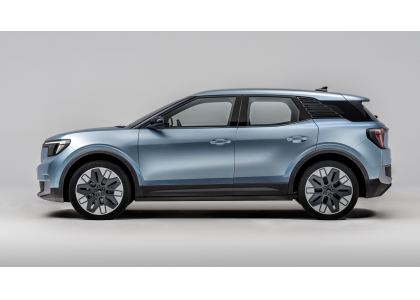
October 2026 has rewritten the economics of Chinese vehicle exports. Beijing has cut the export VAT rebate for electric cars from 13% to 9% starting April next year, and Brussels is capping Chinese hybrid imports at 350,000 vehicles a year. For dealers weighing up whether to buy a used electric car from China, the question is no longer whether Chinese EVs are cheap - it is which one to buy, and from which tier.
Two Ways to Buy a Used Electric Car from China
Importers now face a genuine fork. One road is the Chinese value brand: a near-new battery-electric SUV at a price no European or Japanese rival can match, loaded with technology. The other is a German badge built in China - a premium compact electric SUV that carries brand equity in markets where a badge still drives residuals. Both leave the same ports in Tianjin and Shanghai.
Head-to-Head: BYD Hiace 07 EV vs BMW iX1
|
Factor |
BYD Hiace 07 EV 2025 |
BMW iX1 eDrive25 M Sport |
|
Origin / brand tier |
Chinese value brand |
German premium, China-built |
|
Segment |
Mid-size electric SUV |
Compact luxury electric SUV |
|
Drivetrain |
Pure electric |
150 kW front motor, 250 Nm |
|
Marquee tech |
DiPilot 300, LiDAR, 50-inch AR-HUD, 360 camera |
M Sport pack, Curved Display, adaptive LED |
|
Comfort kit |
Ventilated and heated front and rear seats |
Panoramic roof, sport leather seats |
|
Wheelbase |
2,930 mm |
Compact platform |
|
Listed mileage |
4,016 km, registered Mar 2025 |
2,600 km, registered Feb 2025 |
|
Condition note |
Near-new, original paint |
Original panels and original paint |
|
Typical buyer |
Price-led fleets, tech-forward retail |
Brand-led retail and executive use |
The BMW iX1 eDrive25 lists CLTC range up to 510 km with a 10-80% fast charge in 32 minutes, plus battery pre-heating. The BYD's listing leads on cabin technology instead - a 50-inch AR-HUD, LiDAR-backed assistance and ventilated rear seats are features usually reserved for far more expensive cars.
What the 2026 Export Rules Change
Two policy shifts matter to your margin. First, China's export VAT rebate on electric cars falls from 13% to 9% from April 2027. Deutsche Bank called the four-point cut a direct margin headwind and estimated BYD's net profit per car exported to the EU could fall by about 5,000 yuan (US$747).
Second, the EU will cap Chinese-made hybrid imports at 350,000 vehicles a year initially, rising about 6% annually, after China shipped 452,000 hybrids to the EU in the first half of 2026 alone. Deutsche Bank expects BYD's European sales to fall by roughly 80,000 cars and has cut its 2027 profit forecast by 21%. Pure EVs already face EU tariffs of up to 35.3%.
For importers outside Europe, the read-through is straightforward: exporters squeezed in the EU will push harder into Africa, the Middle East, Central Asia and Latin America - which means better availability and keener pricing for buyers in those markets.
Which One Should Importers Choose?
The decision comes down to your customer. If your buyers are price-led and value specification, a near-new value EV such as the Used Car BYD Hiace 07 EV 2025 Model 610 Smart Driving Edition is hard to argue with - mid-size space, flagship cabin technology and only a few thousand kilometres on the clock. If your market pays a premium for brand and residuals, a Used Car 2025 BMW iX1 eDrive25 M Sport Package delivers the badge, the M Sport specification and a 510 km CLTC rating in a compact footprint.
The Bigger Picture
Both choices rest on a market under pressure at home and booming abroad. China's domestic car sales fell 21.7% year on year in the first nine months of 2026 to 13.3 million units, and among nearly 30 pure-EV makers only three - BYD, Leapmotor and Nio - were profitable in the first half. Exports are the release valve: China Passenger Car Association forecasts put 2026 vehicle exports at 12 million units, up 44% from 8.3 million last year.
Conclusion
Buying a used electric car from China in 2026 is a question of tier, not just price. Value brands win on specification per dollar; German badges built in China win on residuals and prestige. With the export VAT rebate falling in April 2027, importers who lock in stock this year capture today's cost base - and buyers outside the EU benefit most as exporters redirect volume away from Brussels.


