ASEAN EV Import Boom 2026: What Used Car Exporters Need to Know
Introduction
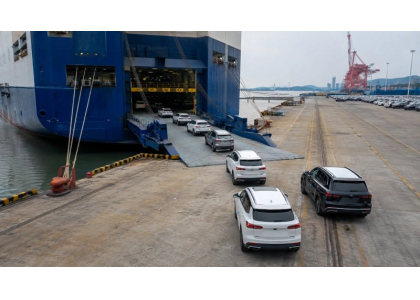
China's electric vehicle export machine is breaking records, and Southeast Asia is leading the charge. In May 2026, Chinese EV exports reached a record $9.2 billion — up 49% year on year — with around 448,000 electric passenger cars shipped overseas in a single month, according to global energy think tank Ember. Shipments to ASEAN hit an all-time high of $1.2 billion in May, led by Thailand and the Philippines. For used car exporters, this is not just another headline: it shows exactly where demand, policy support, and dealer opportunities are moving in the second half of 2026.
Record-Breaking Numbers Behind the 2026 Surge
Chinese exports of battery-electric and plug-in hybrid vehicles more than doubled year on year in the first half of 2026, reaching 2.4 million units, according to China's customs administration. In July, roughly 540,000 EVs left the country — a monthly record — while domestic EV sales fell 12% in the first seven months of the year, data from Benchmark Mineral Intelligence shows. Overall car exports surged 88% to 923,000 vehicles in the latest monthly figures reported by Reuters.
|
Metric |
Figure |
Source |
|
May 2026 EV export value |
$9.2 billion (+49% YoY) |
Ember |
|
May 2026 passenger EV exports |
~448,000 (279,000 BEV + 169,000 PHEV) |
Ember |
|
May 2026 exports to Southeast Asia |
$1.2 billion (all-time high) |
Ember |
|
H1 2026 NEV exports (BEV + PHEV) |
2.4 million (more than 2x YoY) |
China Customs |
|
July 2026 EV exports |
~540,000 (monthly record) |
Benchmark Mineral Intelligence |
|
China domestic EV sales, Jan–Jul 2026 |
-12% YoY |
Benchmark Mineral Intelligence |
Why ASEAN Has Become the Fastest-Growing Destination
Three forces explain the ASEAN surge. First, policy: Cambodia slashed customs duty on battery electric vehicles from 35% to 0% and cut plug-in hybrids to 7% in late March 2026. Lao PDR reduced EV registration and service fees, mandated that transport companies electrify 10% of their fleets by the end of 2026, and temporarily banned petrol car imports until year-end. Second, economics: disruption in global fuel markets has pushed up pump prices, accelerating transport electrification across the region, Ember analysts note. Third, supply: Chinese brands offer the technology, price, and availability local buyers want — in Thailand, all of the top five selling car brands are now Chinese. With the IEA expecting China's domestic EV market to end 2026 flat for the first time this decade, industry analysts say exporting has moved from opportunity to necessity.
Country by Country: Where the Demand Is Strongest
Southeast Asia is not one uniform market, but several openings are clear. Thailand remains the region's heavyweight, taking a record of more than 36,000 Chinese electric cars in May, though its local-assembly quotas mainly affect new-car importers rather than used vehicle trade. The Philippines climbed above 33,000 shipments in May. Cambodia and Lao PDR both hit record monthly volumes, supported by incentives, charging build-out, and local assembly partnerships. Battery-electric vehicles dominate the regional mix, with plug-in hybrids the fastest-growing segment in Cambodia. Vietnam and Malaysia are scaling quickly as infrastructure matures.
|
Country |
May 2026 highlight |
Policy signal |
|
Thailand |
36,000+ Chinese EVs (record) |
Local-assembly 2:1, rising to 3:1 by 2027 |
|
Philippines |
Shipments above 33,000 units |
Expanding charging network |
|
Cambodia |
Record monthly volumes |
BEV duty cut 35% → 0%; PHEV at 7% |
|
Lao PDR |
Record monthly volumes |
Petrol car import ban; 10% EV fleet mandate |
What the EV Boom Means for Used Car Exporters
How does new-EV growth help a used car exporter? Three ways. First, policy openness lowers the barrier for EV imports — Cambodia's zero-duty regime makes landed cost competitive for certified used EVs and PHEVs. Second, inventory rotation: with more than a million EVs shipped from China over the past 18 months still unsold globally, distributors are discounting stock and pressuring residual values — creating buying opportunities for dealers who source quality used units at the right price. Third, market acceptance: a region that embraces Chinese EVs at record levels is far more receptive to Chinese used cars, especially when battery-health documentation eases buyer concerns. Exporters who position used BYD, MG, and other mainstream EVs into incentive-friendly markets are early movers in a fast-growing niche.
Risks and Compliance Checks Before You Ship
ASEAN is not a single market. Each country sets its own duties, age limits, and emission rules — and they change quickly. Cambodia cut BEV duties in March; Lao PDR banned petrol car imports in May. Before shipping, confirm the current duty rate for used versus new EVs in the destination country, check vehicle age and specification limits, and verify whether incentives apply to used imports or only new units. Account for inspection, registration, and charging infrastructure in smaller markets, and remember that local-assembly quotas in Thailand primarily target new-car importers — used vehicle trade still faces homologation and paperwork requirements. When in doubt, verify with official customs sources before committing cargo.
Conclusion
ASEAN has become the growth story of Chinese automotive exports in 2026. Record export values, zero-duty policies, and surging consumer acceptance are reshaping Southeast Asia into one of the most dynamic EV markets in the world. For used car exporters, the message is clear: move early, verify policy country by country, and ride the electrification wave with certified, well-documented vehicles. The window for first-mover advantage is open — and it will not stay open forever.
Disclaimer: This article is for general information only and does not constitute legal, tax, or trade advice. Import duties, policies, and market data change frequently; figures cited are from public sources as of September 2026 and may be revised. Verify all requirements with official customs and government authorities before making business decisions.


